Scotland is the Featured Country for the 2026 Celtic Festival, and we also celebrate Ireland, Wales, Brittany, Cornwell and the Isle of Man, with festivities all over town and especially, the main events at the Australian Standing Stones.
Why are we are privileged to be the home of these Standing Stones?
 I quote from ‘The History of the Australian Standing Stones’ by John Mathew D. Ua.
… ‘The Council for the Standing Stones headed by Peter Alexander canvassed all the councils in NSW that had offered a home to the Bicentennial Scottish Australian Cairn, (awarded to Mosman in Sydney) to gauge their interest on taking on the Standing Stones Project and to ask whether they had an availability of rocks suitable to construct a stone circle. Anything less than granite was believed to be unsuitable for a ring of stones that was intended to stand for millennia.’
An excellent, comprehensive Glen Innes submission was prepared.
On August 26, 1990, acceptance of that Glen Innes submission was confirmed!
… ‘The willingness of the Glen Innes Municipal Council conveyed by (Tourist Officer) Lex Ritchie’s submission, the Mayoral visit (by David Donnelly) to Scotland and persistent calls to the Celtic Council had swung the decision in Glen Innes’ way …’
You need to read John’s book (available at the VIC for $15) to understand the commitment of the many people involved in that project to deliver what we see at Centennial Parklands today.
And our Glen Innes tartan – why were those colours chosen?
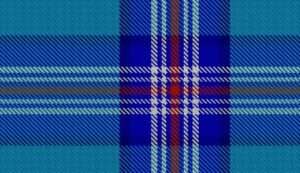 …‘The Glen Innes tartan was the first district tartan in Australia. It has been registered with the Scottish Register of Tartans, the official organisation that registers tartans from all over the world. The design is based on the Earl of St Andrew’s tartan and the colours represent various elements of Australian-Celtic history and it is woven of pure wool.
Each of the five hues that comprise the pattern were chosen by Lex Ritchie and Peter Bruce for their particular local symbolism.
LIGHT BLUE for the clear daytime skies of New England.
ROYAL BLUE for the blue sapphires of New England.
DARK BLUE for the night skies which frame the Southern Cross.
RED for the link of blood with our Celtic Forebears.
WHITE * For fealty and steadfastness of our Celtic tradition’
*Fealty = Fidelity, faithfulness.