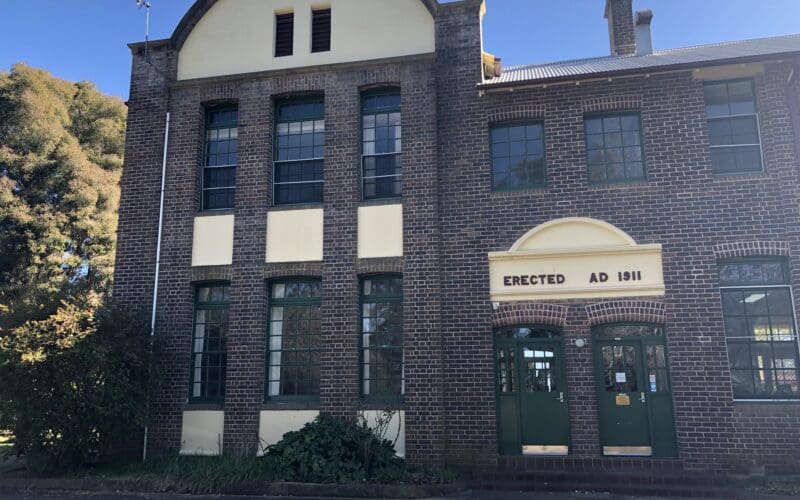
Research Station’s Legacy Too Important to Lose For more than a century, the Glen Innes Agricultural Research Station has played a quiet but vital role in shaping the success of Glen Innes and the wider New England region, with impacts felt across Australia and beyond. Established under the former NSW Department of Agriculture, the Station delivered practical, locally relevant research that helped farmers overcome the unique challenges of the Northern Tablelands. Early graziers battled severe frosts, unreliable pastures and uncertain productivity. Through careful scientific work, the Station identified pasture species suited to the cold climate and developed grazing systems that…
The Glen Innes Experiment Farm was gazetted in 1901. In his 1901 report, the Chief Inspector of Agriculture emphasised the importance of establishing experimental farms stating "the sites were selected for the purpose of ascertaining (by experiment) the most suitable crops for the district, to collect facts for determination of best times to sow and plant, and various matters of that sort” The Farm set about primarily to study and improve the agricultural and pastoral issues of the New England Tablelands, and to conduct suitable research on such that was deemed too expensive for private landowners. The site was heavily…
The Australian honey bee industry is under increasing pressure from drought, floods, bushfires, and limited access to public lands. As a result, private farmland is emerging as a valuable resource for honey production. One promising but often overlooked option is pasture legumes—plants that support livestock and are a rich source of nectar and pollen for honey bees. The Clover4Bees pilot study, funded by AgriFutures Australia, explored how pasture legumes could benefit honey bees. Over two years, researchers evaluated different legume species at four sites across NSW, including the Glen Innes Agricultural Research Station. The study identified six standout species for…
Across the region, more producers are experimenting with mixed species annual fodder crops to improve their feedbase. But do these mixes actually deliver better results than traditional single-species crops? Oats and annual ryegrass have long been reliable options for filling the autumn–winter feed gap, providing high-quality biomass when perennial pastures are less productive. However, interest is growing in whether combining species can offer additional benefits such as feed reliability, extended grazing and improved livestock production. A typical Northern Tablelands mix includes oats, a brassica or legume, and annual ryegrass. Oats provide bulk feed, ryegrass adds high-quality regrowth, and the brassicas…