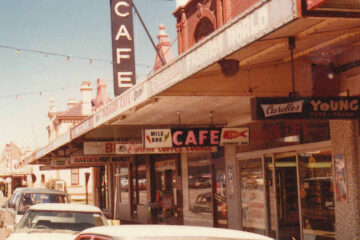
Like many regional towns growing with settlement Glen Innes had a need for fired bricks.
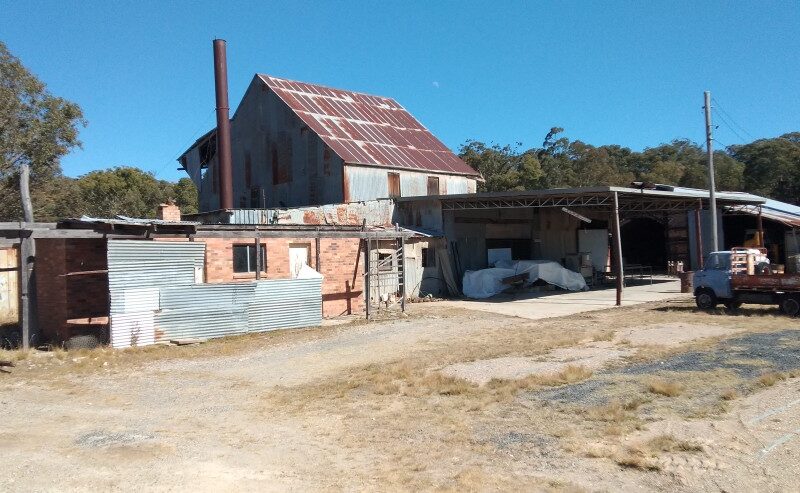
The Willis family name gets a mention as brick makers in the 1870’s and it was the coming of the railway in 1884 that saw the consolidation of brick making in the district. A brick works was established at Bell Rock (at the end of Blue Hills Rd) where production reached 30,000 bricks per fortnight. At some time between 1894 and 1922 the brick works moved from Bell Rock to the current site in Thomas Street. In 1922 The Glen Innes Brick and Tile Company was formed and with the issue of shares for capital the building we see today was constructed along with the installation of steam boiler and engine and brick presses. Clay was dug by hand from the pit behind the works and a steam winch hauled a tub up an incline to dump the clay into a hopper from where gravity fed the clay into a grinding mill, through sieves, shakers and eventually into the presses. Dry pressing was considered to make a superior brick compared to the previously used hand moulding of wet clay and more efficient in that it did not require the extended drying time before firing.
The bricks were fired in a kiln reaching over 1000 degrees C and to hold high temperatures for a matter of days over twenty tons of wood would be consumed for each batch. One of the original four open top kilns has been preserved while the more ‘modern’ closed kiln was used in recent decades.
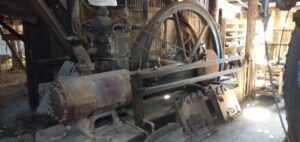 Periods of upgrading occurred in the early fifties and mid sixties. In the early eighties Glen Innes Municipal Council took over ownership and modernized production with the use of a front end loader to dig and move clay, fork lifts and even flushing toilets. However, profits were elusive and the works were closed. Shortly after John Marr took on the challenge which saw machinery electrically driven and the steam engine retired. Sourcing the required timber for firing was becoming difficult and a conversion to coal was made. Again, the economics of a labour intensive process, high fuel and other costs saw the last firing in 1994.
Since that time the works, although occupied by a concrete business has lain forlorn and derelict.
The locally based New England Heritage Traction Club is organised to preserve all things related to historic 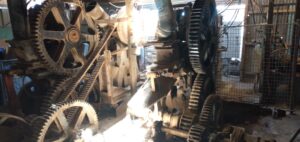 machinery and industrial archaeology and has taken on what may be the only surviving steam powered brick works in the southern hemisphere as a conservation project. The Club has been appointed Crown Lands Manager of the precinct and after a period of tidy up is now able to hold its first open day to the public. In addition to getting a glimpse inside the works with guided tours and a documentary film made of the operation when driven by steam there will be an exposition of the Club’s other activities. As well as vintage cars, tractors and trucks there will be traction and portable steam engines in steam.
There will also be a garage sale of surplus items, sausage sizzle, CWA with their famous tea and scones along with other stalls.
The Club is seeking volunteers to assist with this project, whether your interest is in mechanical, building, history/archives or just being part of the scene.
Sunday 14 th June between 10am and 2pm, entry by gold coin donation (no eftpos)
1b Thomas Street, Glen Innes