Sachs Lane between the Church Street GISC building and Jamesies is named after South German born tinsmith Valentine Sachs who had fought in the Franco German war in the 1870s before migrating to Australia and settling in Glen Innes in the 1880s.
Valentine Sachs obituary Glen Innes Examiner, 27 November 1913:
…’He took a very active part in the progress of the town and was an alderman for over 20 years and occupied the Mayoral chair during the year the gasworks were built [1893].
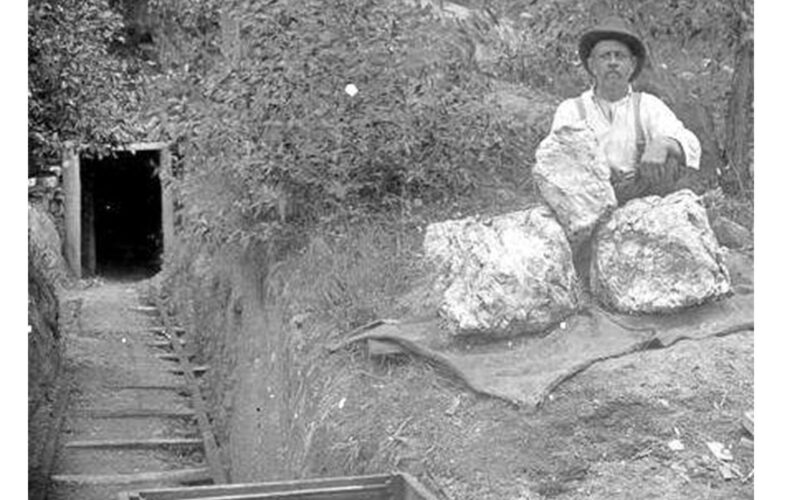
He also took a keen interest in mining and was for some time interested in several tin shows on the Mann river and subsequently became owner of the Kingsgate molybdenite and bismuth mine from which venture he amassed a small fortune.
About five years ago owing to ill-health he went to Sydney at which place he became the senior partner of Sachs, Strauss and Co., wool and skin merchants…’
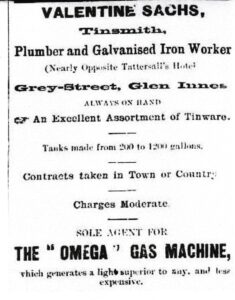 No mention of His Soap factory (situated in Soap Street – renamed Lang Street in 1889.)
The Armidale Express ran this article 25 October 1892
‘We did ourselves the pleasure recently of visiting Mr Sachs’ soap factory. Everything in the place was the essence of cleanliness – a circumstance we deemed somewhat remarkable knowing that soap is made from tallow and all manner of greasiness.
The finishing touches were being put by the proprietor and his assistant to cakes of his patented eucalyptus soaps. He showed us the fibrous remnants of the gum leaves whence he obtains the eucalyptus extract that permeates the soap in question. This really is second in quality to none we have tried. It lathers very well, and after washing ones hands with it a most agreeable soft, after sensation is felt. We have no hesitation in recommending those of our readers who have not already done so to try Sachs’ eucalyptus soap.’
This proved to be a very valid recommendation as his eucalyptus soap won Sachs a Certificate of Merit and a Bronze medal at the Chicago World Fair in 1896!
He was replaced by John Rule on Council in July 1905 after his disqualification for being absent from meetings for the ‘unlawful time of three months without leave.’ He had been appointed under Council’s seal as its representative abroad and no doubt was under the impression that leave had been granted, however no formal resolution was recorded in the Minute book.
‘