Glen Innes’ Celtic connections go right back to the arrival of the first white settlers in 1838 when the Boyd family from Selkirkshire in Scotland took up Boyds Plains – now Stonehenge Station.
Although Wellingrove was our first official centre, it was soon realised it was too isolated.
When Surveyor JJ Galloway laid out the town in its present location in 1852, he surveyed it beside the track, the Great North Road, which ran between Armidale and Drayton (forerunner of Toowoomba).
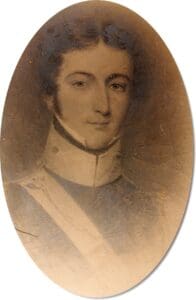
At the suggestion of Archibald Mosman, the town was named in honour of Caithness-born Major Archibald Clunes Innes – former owner of Furracabad Station.
Although the book Scottish Pioneers of the Glen Innes District is so far the only local publication to focus on people from a particular Celtic nation, many other books mention Celtic backgrounds – The Beardies Heritage, and those about Red Range, Deepwater, Ben Lomond, Emmaville, Torrington, Glencoe, Glen Elgin, the Masonic Lodge histories, and numerous family and other histories.
My great grandfather the Rev Archibald Cameron, born in Crieff and licensed by the Free Church of Scotland, came out to NSW where he was ‘issued a call by the people of Wellingrove and Byron in 1854 to exercise the office of the ministry in this district…’
At a cursory glance it appears many of the early Cornish mainly were miners – ‘By Tre, Pol and Pen shall ye know all Cornishmen’; the Irish, hotelkeepers e.g Bart McCormack and Martin McMorrow; many Scots took up farming and grazing pursuits.
Are there any locals whose ancestors originated from Wales, Isle of Man or Brittany?
The Glen Innes Historical Society’s ‘Land of the Beardies’ is not just a museum exhibiting artifacts, but as well is an extensive & unique family and local history resource centre with transcriptions of births, deaths and marriages (transcribed from the Court House before the records were sent to Sydney), maps, Government Gazettes, an almost complete run of the Glen Innes Examiner (which has been indexed from 1874 to 1991), local and family histories, research guides, cemetery records, miner’s and mining files, more than 53,000 databased photographs, records from many organisations etc, and is used by local historians, heritage consultants & students at all levels.
Visit our museum where for a small fee we can also assist in your search for your ancestors, both Celtic and otherwise.