This huge, beautiful popup Nativity scene Christmas card was given to young Dorothy Kneipp by Percy Sing Young of Kwong Sing and Co about 1907. Dorothy married Royal Hartmann in 1926, and their daughter Helen gave the card to the museum and Harvey Young very kindly made a display case for it. This card was but one of the presents Kwong Sings gave to their customers, particularly at Christmas time. (For wedding presents, it was a pair of beautiful vases.) One hundred years ago The Glen Innes Examiner of Saturday 19 December 1925 advertised the type of merchandise being promoted…
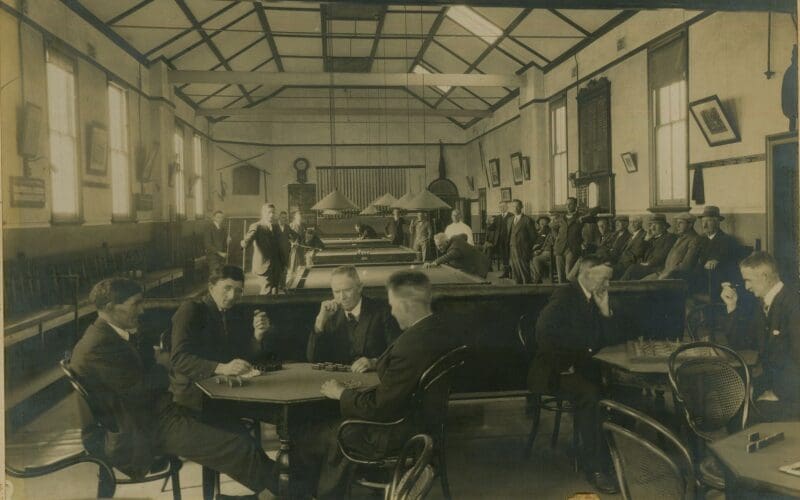
With talk of establishing a local School of Arts & Music it is a good opportunity to recall that Schools of Arts once flourished in Glen Innes and surrounding villages. However, these historic institutions were very different from the current proposal. Our Schools of Arts, a name interchangeable with Mechanics Institutes, Literary Institutes and Miners Institutes all provided at least a library service in the very early days. School of Arts were established at Ben Lomond, Deepwater, Dundee, Furracabad, Glencoe, Red Range, Shannon Vale, Skeleton Creek, Stonehenge, Tent Hill and Waterloo, a Miners Institute at Emmaville and a Literary institute…
Excerpts from a long article by the Examiner Special Correspondent, March 1,1920.... ‘As far back as 1878 Red Range consisted of a small store and dwelling, owner by Mr Trotter. A few settlers had come here on the properties once included in Shannon Vale Station - amongst them being Messrs D Pogson, Jno Marshall, J Taylor, Cheney and J Heaney. A large lagoon, now on Mr J Ryall’s property was the boundary dividing Red Range from Shannon Vale. On 1870 the school was transferred from a building on Mr J Taylor’s to a new schoolhouse built by Mr Ruming and…
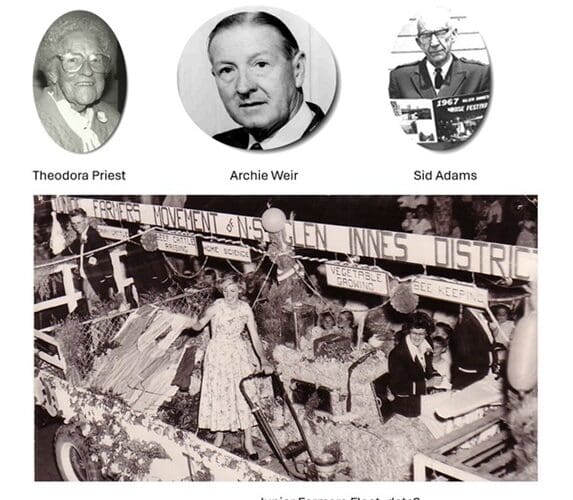
For years crepe paper was in high demand in October and November as many people crafted thousands of paper roses for Rose Festival floats and shop windows. This festival followed a Gala Festival which ran from 1944 to 1955. The new event had a shaky start - the first Public Meeting called by Mayor Bill Wilson on 10th February 1956 attracting only five interested citizens, Town Clerk and three aldermen. Not deterred however, those present formed a committee to hold a Rose Festival later in the year and contacted town organisations with a plea to send representatives to the next…
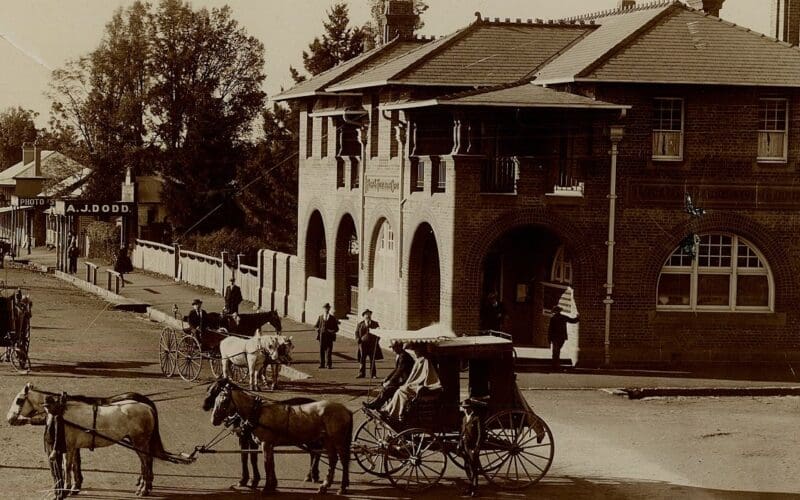
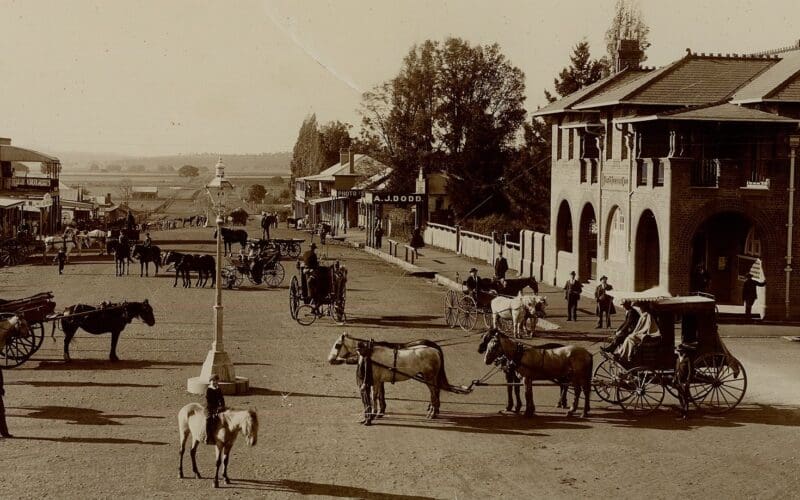
Timbs Pharmacy is celebrating 150 years of dedicated service to Glen Innes. This, the first pharmacy to be established in Glen Innes has been in the hands of only five owners Arthur Dodd, Grover brothers, Pat Timbs, Bill Munro and Dimity Newsome. AJ Dodd originally dispensed from a small building north of the present Court House and when, in 1900 the Hutchison Estate erected the present, now heritage listed pharmacy on the corner of Grey and Bourke streets, he moved and worked there for 24 years. In contrast to today’s bright spacious premises a faded print of 1909 depicted a…
🌧️ Rain couldn’t stop the crowds! Despite the rolling scuds of rain, Glen Innes locals — joined by curious visitors — streamed into the Old Glen Innes Power Station on Saturday. By 9:30am, the building was alive with a fantastic turnout, all eager to marvel at the technology that once powered our town through the 1930s, 40s and 50s. The undisputed stars of the show? Two enormous engines, still as impressive today as they were nearly a century ago. Guests were handed a vintage brochure from the History House, written and edited by Ivan March, recounting the story of the…
Seventy years ago, in April 1955 after his invention developed from killed polio virus had been tested in one of the largest clinical trials in history, American virologist Jonas Salk’s polio vaccine was officially declared ‘safe, effective and potent’. It was an unprecedented scientific breakthrough in the control of the spread of one of the most dreaded diseases of the 20th century. Polio, or Poliomyelitis, also known as Infantile Paralysis, is a highly infectious viral disease primarily affecting the nervous system, with flu-like symptoms, brain inflammation, and in severe cases, paralysis. In 1964 Albert Sabin’s oral polio vaccine administered as…
An Open Day on Sunday 20 September from 9am to 4pm is a great opportunity for us to tour and consider adaptive re-use of the Power House at the rear of the Town Hall. ‘Adaptive reuse is the process of repurposing old buildings for new uses while retaining their historic features.’ To briefly shed some light on our power history: In 1884 the streets were illuminated by 25 gas lamps, but lighting these could be dangerous. Lamplighter Henry Wheeler suffered a broken wrist 1897 when he was thrown from the horse he was standing on to light the lamp on…
Local shearing sheds are again echoing to the scuttling sound of hooves on boards, whirr of the electric gear and clank of presses – a far cry from the days of the sheds echoing to the click of the blades (hand shears) as the shearer took the full length of the blade for the cut and the ‘knockers’ met. The record for a day’s blade shearing is 321 merinos in seven hours 40 minutes by Jackie Howe at ‘Alice Downs’, Blackall in Queensland in 1892. However, in 1907 Deepwater local gun shearer John Edward Dean shore 274 sheep in a…
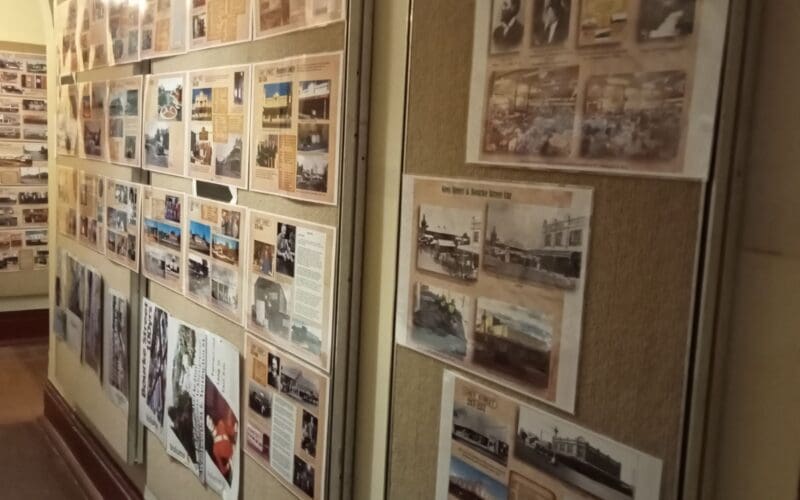
A new exhibition at the Land of the Beardies History House Museum is inviting the community to take a trip down memory lane with “Grey Street CBD c.1860s – 2000s”. The display charts the evolution of businesses and buildings along Grey Street over more than a century, offering a nostalgic look at the changing face of Glen Innes. The exhibition explores both sides of Grey Street—from the corner of Ferguson Street (home to the former Royal Hotel, now Pathfinders) through to Lang Street on the east side, and from Hollie Homes (once Whyte’s Boot Factory site) through to the Club…